Moussem of Moulay Idriss al-Akbar (Zerhoun)
An annual pilgrimage and saint's festival honouring Idris I, founder of the Idrisid dynasty, at his mausoleum in the hilltop town of Moulay Idriss Zerhoun near Meknes, Morocco.
When it happensTimed by the season, the harvest or the moon, so it drifts by weeks from year to year.
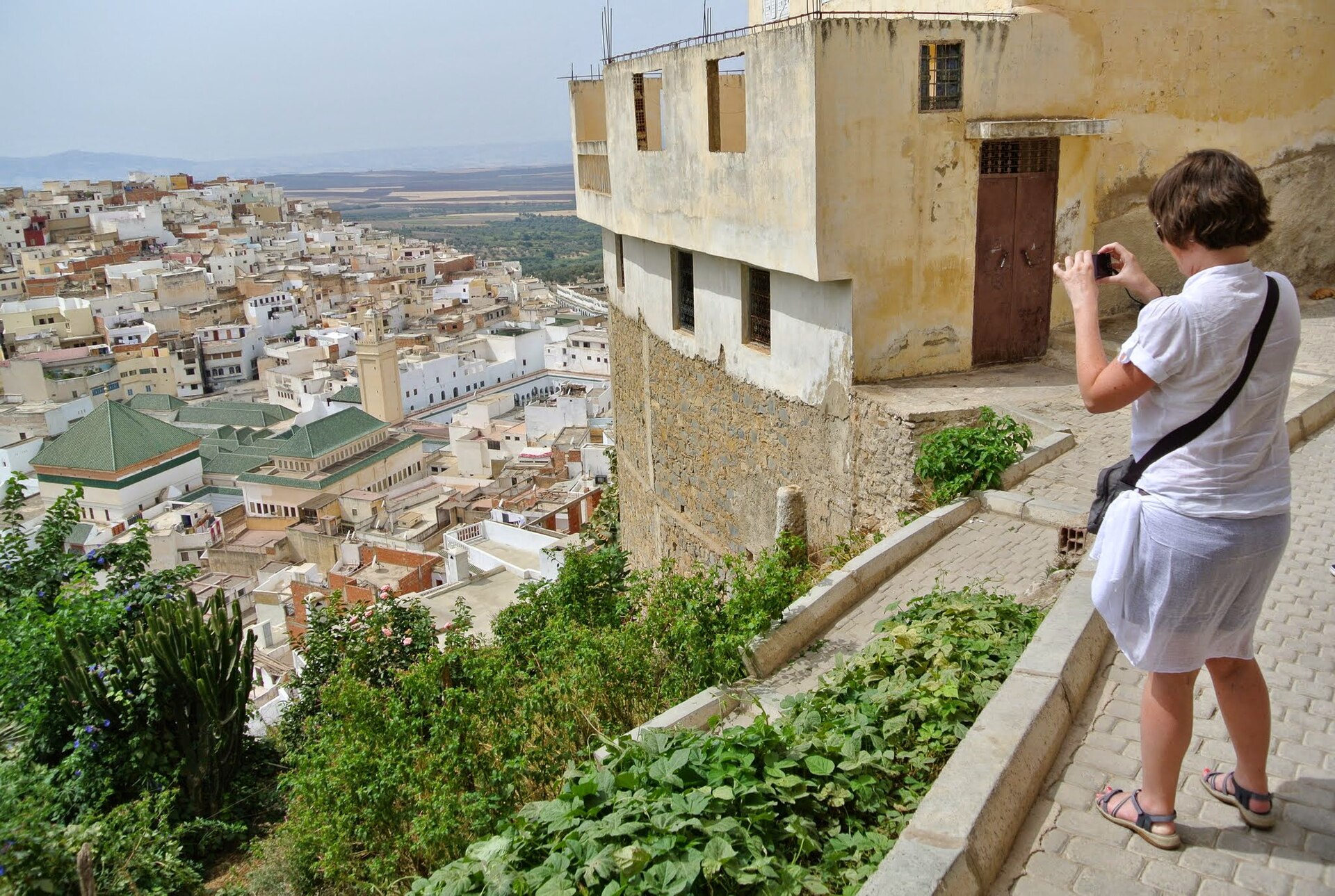 Source: Ben Bender
 Where it happens
📍 Moulay Idriss Zerhoun · Morocco
One of Morocco's largest moussems (religious festivals), celebrating Moulay Idriss I, founder of the first Islamic dynasty in Morocco. The festival combines religious pilgrimage with cultural celebrations.
About Moussem of Moulay Idriss al-Akbar (Zerhoun)
The Moussem of Moulay Idriss al-Akbar is the largest saint's festival in Morocco. It takes place at the mausoleum of Idris I in the town of Moulay Idriss Zerhoun, which is situated on two hills at the foot of Jbel Zerhoun and overlooks the Roman ruins of Volubilis (Walili), approximately 30 km north of Meknes. Idris I, a descendant of the Prophet Muhammad, fled west after the Battle of Fakhkh in 786 and was welcomed by the Awraba nation-group at Walili. He established the Idrisid dynasty, the first Muslim state in Morocco, and is buried in the town that bears his name. The town itself is small, with about 11,600 residents, but the festival transforms it completely.
Every year, tens of thousands of pilgrims flock to the town, significantly outnumbering its residents and revitalising the local economy. Sufi brotherhoods and trade organisations also come to seek the saint's blessing (baraka). For many Moroccans who cannot travel to Mecca, this visit serves as a spiritual alternative, and the moussem is often referred to as the "pilgrimage of the poor" (in scholarship, Hajj al-Miskin).
The term "moussem" comes from the Arabic word "mawsim," meaning "season," and this gathering occurs in the post-harvest late summer, lasting for over a month.
A parallel moussem honours Idris II, the son of Idris I and the patron saint of Fez, at his zawiya in the heart of Fes el-Bali. Idris II established Fez as his capital in 808-809, on the opposite bank of an earlier settlement his father had begun around 789.
The Fez moussem occurs later in the year, in late September or early October, and lasts about a week. Both events maintain a similar devotional character, featuring processions of guilds through the medina, prayers at the tomb, Sufi music, and nightly vigils.
Origins & significance
After the Battle of Fakhkh in 786, Idris ibn Abdallah fled to the Maghreb and married Kenza al-Awrabiya in Walili, where he was recognised as imam. He died in 791, allegedly poisoned by the Abbasid caliph Harun al-Rashid. His son, Idris II, was born posthumously and took leadership around 803, establishing Fez as his capital in 808-809.
The cult of the Idrisid founders faded after the 10th century, was suppressed by the Almoravids, and later revived by the Marinids from the 14th century. The rediscovery of Idris I's remains in Zerhoun is dated to 1318, while Idris II's tomb in Fez was rediscovered in 1437. The Saadian and Alaouite dynasties, claiming descent from the Prophet, elevated both figures for legitimacy, with Alaouite sultan Moulay Ismail rebuilding the Zerhoun mausoleum between 1719 and 1721.
How it's celebrated
Pilgrims visit Moulay Idriss's tomb, participate in processions, and enjoy music and dance.
Plan your visit
Moulay Idriss Zerhoun is about 30 km north of Meknes and about 3-5 km from the Roman ruins of Volubilis, reached easily by grand taxi or bus from Meknes (roughly 30 minutes) or from Fez (1.5-2 hours).
The public festivities, processions, music and fantasia are open to all, but the interior of the mausoleum and shrine is reserved for Muslims; non-Muslims can look in from the entrance.
Modest dress is expected (shoulders and knees covered).
Accommodation is limited, so book ahead during the moussem.
The streets are steep and stepped, so wear good shoes.
Whose festival it is
The culture
Pilgrims and performers don white or cream wool jellabas, leather babouche slippers, and turbans or red felt caps (tarbouche/fez).
Women wear embroidered caftans and takchitas, often with henna, while Tbourida riders sport matching white jellabas and turbans.
Sufi devotional music dominates: dhikr chanting, frame drums (bendir), larger drums, double-reed shawms (ghaita), and the guembri lute and iron qraqeb castanets associated with trance brotherhoods.
The central dance of the Sufi tradition is called the hadra, which is an ecstatic trance performed by the brotherhoods during their vigils. In Moroccan folklore, collective dances such as Ahidous (from the Middle Atlas) and Ahwach (from the High Atlas and Souss regions) are significant parts of traditional moussem celebrations. However, their specific presence at this urban moussem is not well documented.
Help keep this accurate
Festivals change year to year. If you know this one, from the community or as an organiser, a quick confirmation or correction keeps it right for everyone.
Log in to confirm this festival or suggest a change.
Embed this page on your site
Add a badge that links back to this official festival page.