Nile festival
Celebration of river life with boat races, music, and crafts on the Nile.
When it happensWe hold this festival on record. Its dates still need confirming by someone who knows it.
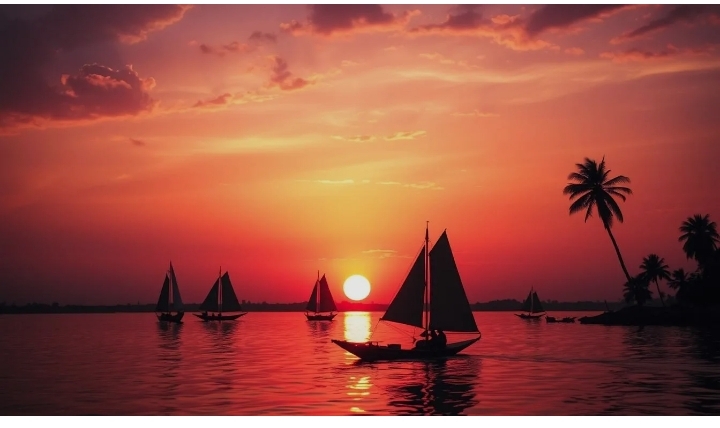
Where it happens
📍 Khartoum · Omdurman · port Sudan · Sudan
About Nile festival
Every January, when the weather in Sudan is cool and the Nile is calm, Khartoum wakes up to music and colors.
How it starts
The government + artists + people from the 3 cities decide: "يلا نحتفل بالنيل".
For 1 week the banks of Blue Nile + White Nile turn into a big open stage.
What happens in the story Day 1: The opening. Boats decorated with lights and Sudanese flags do a parade on the water. Dancers in "توب" and "سروال ومركوب" welcome everyone.
The middle days:
- Boat races: Young men row like their grandfathers used to for fishing
- Crafts market: Women from the north sell "الخوس" and baskets. People from Darfur sell leather. People from the east sell silver
- Food street: You smell "شية", "سمك مشوي", "كسرة بملاح", and tea with cardamom
- Music nights: Hقيبة songs, jazz, and new Sudanese bands play until late. Old and young dance together
The last day:
Fireworks over Tuti Island. People throw flowers in the Nile and say "شكراً يا نيل" for water, life, and farming.
Why it matters
The Nile is not just a river in Sudan. It's home, food, transport, and memory.
The festival is a way to say: "This river connects us all" - North, South, East, West. Farmers meet artists. Kids who only saw the Nile on TV finally touch it.
It only lasts 3-7 days, but it reminds everyone that life in Sudan = life on the Nile.
Origins & significance
1. Origin The Nile Festival was inaugurated in 2004 in Khartoum, Sudan.
Historical Context and Rationale:
- Tourism and Cultural Diplomacy: In the early 2000s, following Sudan’s increased engagement with the global community, the state sought to project an image of Sudan as a nation defined by the Nile, cultural diversity, and peace.
- National Unity: As the Nile River traverses all major regions of Sudan, it was selected as a unifying national symbol capable of bridging Sudan’s diverse ethnic and geographic communities.
- Historical Continuity: The festival was conceived to honor the river’s central role in Sudanese civilization, from the Kingdom of Kush to contemporary Sudan, as the primary source of agriculture, settlement, and identity.
Venue: The inaugural event was held at Al-Mogran, the confluence of the Blue and White Nile in Khartoum. In subsequent years, the festival expanded to include Omdurman and Port Sudan as additional host cities.
2. Significance The Nile Festival holds multidimensional importance for Sudanese society:
-
Cultural Identity:
The Nile occupies a central place in Sudanese literature, music, and oral tradition. The festival reinforces collective identity by reviving traditional expressions such as Haqeeba music, indigenous boat-making, and regional attire, thereby affirming the notion of "نحن أولاد النيل" - "We are the children of the Nile." -
Economic Development:
The event functions as a catalyst for the local economy. It stimulates tourism and provides market access for artisans, farmers, and vendors from across Sudan’s states. Related sectors such as hospitality, transport, and handicrafts experience seasonal growth during the festival period. -
Social Cohesion and National Unity:
The festival creates a shared public space where communities from Eastern Sudan, Western Sudan, Central Sudan, and the capital interact. It temporarily transcends regional and ethnic divisions by centering collective celebration around a common natural resource. -
Environmental Awareness:
In addition to celebration, the festival incorporates discourse on environmental stewardship. Programs address themes of river conservation, sustainable fishing, and pollution control to promote long-term protection of the Nile ecosystem.
3. Conclusion In summary, the Nile Festival originated in 2004 as a state-led initiative to promote tourism, unity, and cultural heritage. Its enduring significance lies in its role as a platform for affirming Sudanese identity, fostering economic activity, strengthening national cohesion, and advocating for environmental responsibility in relation to the Nile River.
Plan your visit
Free entry. Jan–Feb in Khartoum/Al-Mogran. Wear light cotton + tobe/galabiya. Expect music, dance, crafts, and fish. Bring cash, arrive early, stay hydrated. Nights get cool by the Nile.
The culture
Samak Mashwi*: Grilled Nile fish with spices 2. Aseeda: Sorghum dough with meat/vegetable stew 3. Baleela: Boiled wheat with milk and sugar 4. Kisra: Thin sorghum flatbread 5. Gurasa: Thick bread served with stews
Women wear the tobe in white or colors with gold embroidery + jewelry. Men wear galabiya, saddiri, taqiya + markoub. Beja wear fota with beads, Nuba wear beads + body paint.
Haqeeba songs with oud + accordion lead the festival. Also Beja drums, Nuba rhythms, and Kordofan kira music. Modern Sudanese bands mix jazz and pop.
Features Daleeb from the north, Beja stick dance from the east, and Nuba group dances with drums. Haqeeba couples dance and boatmen’s dances are also performed.
Help keep this accurate
Festivals change year to year. If you know this one, from the community or as an organiser, a quick confirmation or correction keeps it right for everyone.
Log in to confirm this festival or suggest a change.
Embed this page on your site
Add a badge that links back to this official festival page.