We all know how Ancient Egypt turned cats into celebrities. From Mafdet, the justice goddess, to Bastet, the protector of homes, Egyptians didn’t just own cats… they practically worked for them. And can you blame them? When you’re a farmer and a small furry hunter suddenly solves your rodent problem, that animal becomes a national hero.
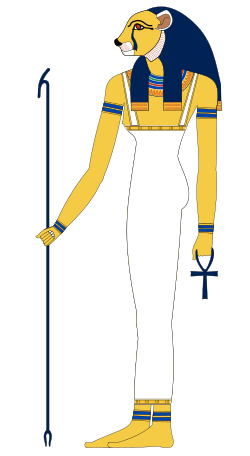
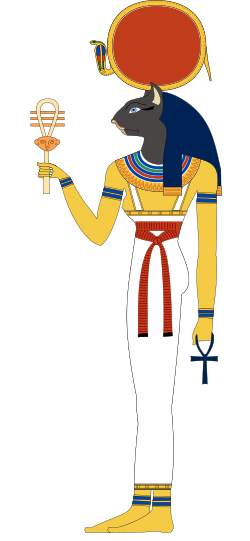
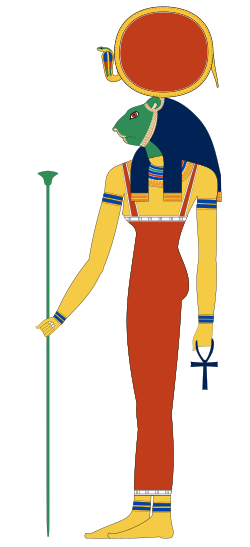
Image 1: A depiction of Sekhmet.
Image 2: A depiction of Bastet.
Image 3: A depiction of Mafdet.
But Egypt wasn’t the only African society where animals rose to divine status.
West Africa has its own legendary creature, the python.
And nowhere is this story richer than in Ouidah, a coastal city in the Republic of Benin.
Before we proceed, a brief but important note: the Republic of Benin (a modern country) is distinct from the Kingdom of Benin in Nigeria: two different places, two different cultures. The python tradition belongs to the Fon people of southern Benin and the old Kingdom of Hueda, not the Edo kingdom of Benin City.
Where the Python Became a God
Long before Europe ever touched West Africa, the coastal kingdom of Hueda (1650–1727) had a powerful serpent deity called Dangbè - a divine python who represented wisdom, fertility, war, justice, rain, prosperity, even the cosmic balance itself.
To the Hueda people, the python wasn’t just an animal.
It was a moral teacher, a creation spirit, a protector of kings.
One Fon proverb captures this perfectly:
“Nu e úo m’ xo m’… e w’ n. nyi vodun m’ ton.”
What is in your heart is your god.
Meaning: people revere what protects them and keeps them alive.
In Hueda, that protector slithered.
Royal pythons lived freely in homes, rafters, marketplaces, and palace compounds. When one crossed the road, business stopped until the priests escorted it safely. Harming a python was a capital crime, literally punishable by death.
Even the architecture of Hueda reflected serpent symbolism: the snaking ditches that ringed compounds mirrored Dangbè’s form.
This wasn’t a small cult; it was the state religion.
The King Who Was Saved by Snakes
When Dahomey conquered Hueda in 1727, they absorbed the python cult into their own Vodun system. Which brings us to the legend that shaped Ouidah forever:
During a war in the early 1700s, King Kpassè of Ouidah fled into the forest to escape his enemies. As soldiers searched for him, pythons emerged, wrapped around him, and hid him from sight. The king survived because the snakes chose to protect him.
In gratitude, he built shrines to honour them. One of those shrines eventually became today’s Temple of Pythons.
Inside the Temple of Pythons
Walk into the temple today, and you will meet around 50–60 royal pythons, calm, bold, and unbothered by the hundreds of visitors they meet each week.
But the part that surprises most people?
The snakes aren’t fed inside the temple.
They are released regularly - weekly or monthly - to hunt freely in town. At night, they enter people’s homes like VIP guests and are fed chickens or mice, then escorted back with respect.
In Ouidah, a python in your living room is not a crisis.
It’s a blessing.
An Igbo proverb explains this reverence beautifully:
“Egbe bere, ugo bere” Let the kite perch, let the eagle perch.
In other words, every creature has its place in the world.
And in Ouidah, the python’s place is everywhere.
What Happens If You Kill One?
Intentionally killing a python is believed to bring death, misfortune, or spiritual retaliation. The killer must undergo cleansing rituals, led by priests, and the python receives a full human-like burial.
Accidents happen, but respect is mandatory.
The Temple Stands Opposite a Catholic Basilica
Perhaps the most poetic detail is this:
The Temple of Pythons is deliberately located directly opposite Ouidah’s grand Catholic basilica.
Two belief systems.
Two cosmologies.
Facing each other without conflict.
This reflects a common Beninese reality: many people comfortably practice both Christianity and Vodun together. One is not seen as an enemy of the other, just two paths to the same truth.
It Must Be Nice to Be a Snake in Benin…
Think about it:
- You wander into someone’s house.
- They feed you.
- They escort you home.
- You are treated like a royal guest.
- And when you die, you get a ceremonial burial.
Not a bad life.
Other African Societies That Revere Animals
- Among the Igbo, pythons are children of Ala, the earth goddess.
- Among the Ewe and Fon, the rainbow serpent Ayida-Weddo symbolises cosmic balance.
- Among the Shona, lions carry ancestral spirits.
Africa has always known a simple truth:
Nature is not separate from us. It is part of who we are.
Join the Lughayangu Community!