It is often said that the dog is man’s best friend.
Burkinabè people disagree.
In Burkina Faso, the horse reigns supreme.
You see horses everywhere.
From the nation’s coat of arms, which features two horses flanking the flag…
To the national football team, known as Les Étalons (French for “The Stallions”), whose supporters chant by mimicking the sound of galloping hooves.
Even the country’s most famous film festival, Pan African Film and Television Festival of Ouagadougou (FESCPACO), awards a golden stallion to its winners.
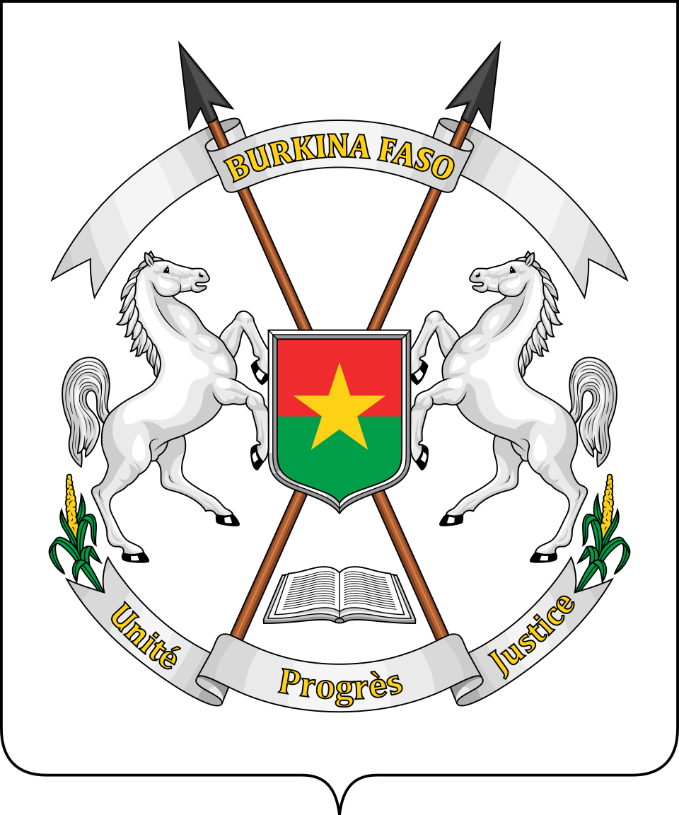
Image 1: Burkina Faso's Coat of Arms
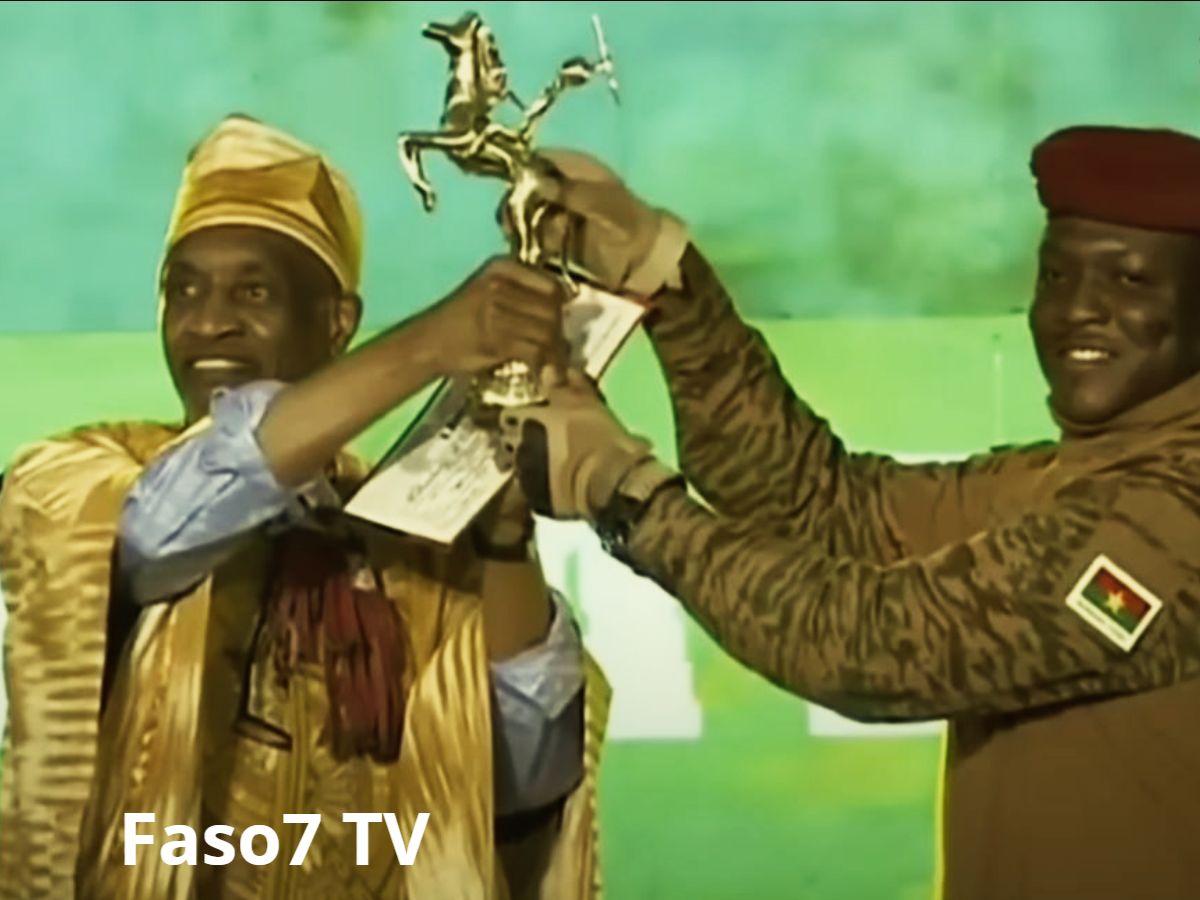
Image 2: Burkina Faso President Ibrahim Traore and filmmaker Dani Kouyate at the 2025 FESPACO Awards
And if that isn’t enough, the most common boy’s name in the country is Ouedraogo, meaning “male horse” in the Mossi language.
The horse is everywhere. A fact that has earned Burkina Faso the nickname “The Cowboys of Africa.”
But how did this come to be?
Rise of a Horsewoman
To answer that, you have to travel back beyond modern borders. Back before Burkina Faso had a name. Back to a time when power was felt as much as it was recorded.
The story begins sometime in the 12th century, in the Dagbon Kingdom (present-day Ghana).
There ruled a powerful king named Nedega and his queen, Napoko. And among their children was a daughter unlike any other.
Her name was Yennenga.
From an early age, Princess Yennenga learned to hunt and fight, and she soon joined her father in battles against neighbouring communities.
He allowed her to lead his army of warriors, and in time, she became a skilled horsewoman, commanding her battalion from the saddle.
The Warrior Who Was Not Allowed to Leave
As Yennenga’s reputation grew, so did her value to her father’s kingdom.
She was no longer just a daughter. She was a weapon. A symbol. A commander whose presence on horseback could decide the outcome of a battle.
And so, when the time came for her to marry, her father refused.
King Nedega believed that losing Yennenga to marriage would mean losing one of his greatest military advantages. Her skill, her leadership, and her horse all belonged to the kingdom. Not to another household.
But Yennenga did not accept this quietly.
According to the legend, she protested her confinement and demanded the right to live her own life. When her defiance grew too loud to ignore, her father had her placed under guard, isolated and watched.
For a warrior who had ridden freely across open land, this was a deeper wound than any blade could cause.
It was then that help came from an unexpected place.
One of the king’s trusted horsemen, moved by Yennenga’s resolve, chose loyalty to justice over loyalty to the throne. Under the cover of night, he helped her escape.
Yennenga mounted her horse, turned her face north, and rode away from the life that had been chosen for her.
The Lineage and the Kingdom
Together with her stallion, Princess Yennenga rode north into the forest.
There, while in hiding, she met a lone elephant hunter named Riale.
Though they came from rival communities that were fighting at the time, the two fell in love.
Soon after, they had a son whom they named Ouedraogo (stallion).
Ouedraogo grew into a strong man and later decided to visit his grandfather, Nedega.
King Nedega was surprised to learn that his daughter was still alive. He arranged a feast in her honor and urged her to return home. She did so, together with her husband Riale and their son Ouedraogo.
During his stay, Nedega ensured that Ouedraogo received the best warrior training.
When he came of age, Nedega gifted him cattle, cavalry (four horses and a number of horsemen), and other goods. Using these, Ouedraogo formed his own battalion and set out to establish his own rule.
Over time, he subdued surrounding communities and founded what became the Mossi Kingdom.
The kingdom grew into one of the most powerful states in the region. It successfully resisted neighboring rivals and later fought off Atlantic slave raids during the 16th century.
The Mossi Kingdom remained intact until 1896, when French colonial forces took control during the Scramble for Africa. The territory became French Upper Volta, and later, modern-day Burkina Faso.
The Horse Lives On
Fast forward more than century later, and the Mossi people are still the largest group in the region.
And the horse has remained central to their identity.
Every Sunday, horse races are held in the capital city of Ouagadougou.
The jockeys competing here do not have racing gear, and they compete in dusty trails marked by tyres, but none of these hinders them from having fun.
The sport is so popular that locals often place bets on the horses.
The horses are treated with care. Fed, watered, and rested long before the races begin.
On the track, boys as young as nineteen race alongside men in their forties. Dust fills the air. Hooves pound the ground. Bets are placed.
Sometimes, as much as 20,000 to 40,000 CFA francs are at stake.
These races draw people from across the country, reminding them who they are.
The cowboys of Africa.
Happy new year!
Till next time,
Mike.
Join the Lughayangu Community!