In 2020, the world hit pause. COVID-19 brought daily life to a grinding halt. Suddenly, masks were fashionable, hand sanitiser was gold, and the one thing everyone desperately waited for was a vaccine.
And when it finally arrived, just before 2021, the world exhaled.
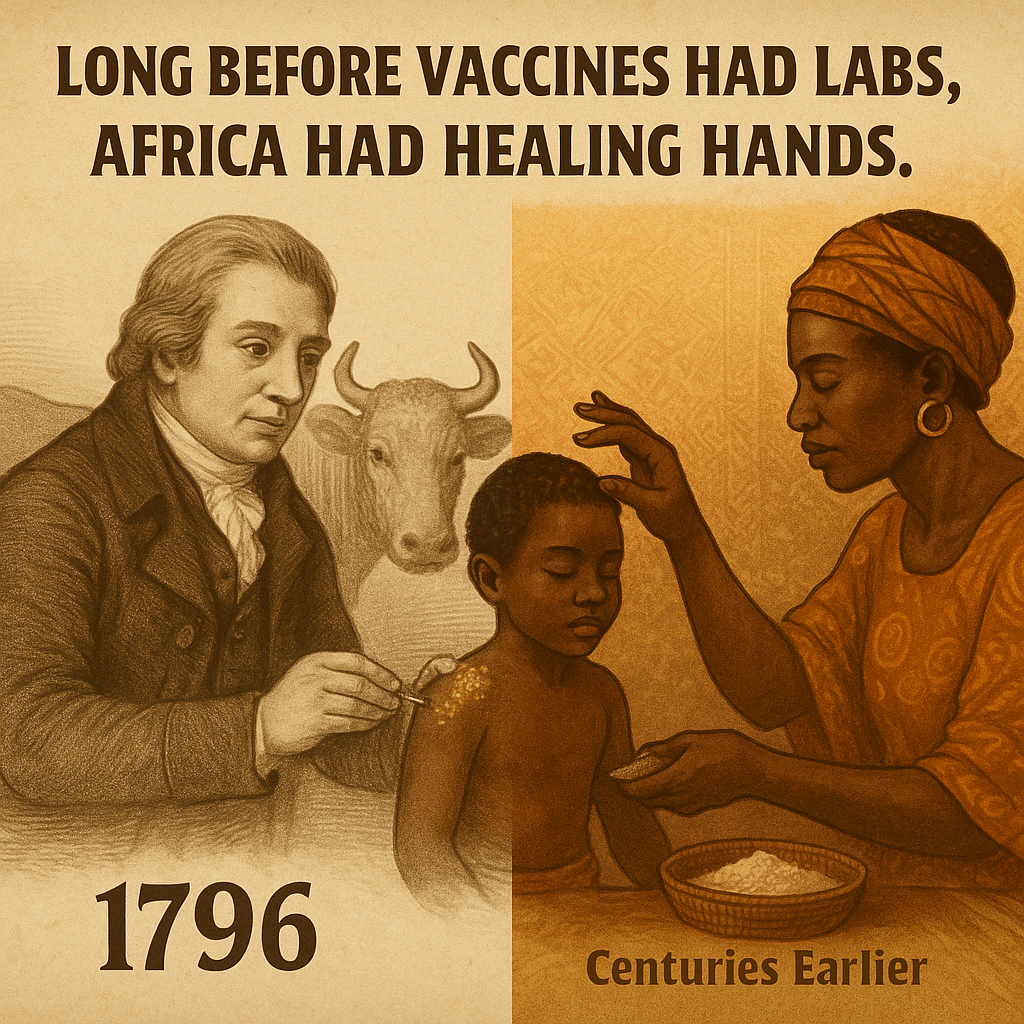
Vaccines are, no doubt, one of the most powerful tools in medicine. They’ve helped us fight polio, measles, diphtheria, and most famously, smallpox, the only human disease we’ve ever completely eradicated. That victory is often traced back to 1796 and Edward Jenner, a British physician who developed the first smallpox vaccine using cowpox.
But what if I told you that the story skips the intro?
Before Jenner, There Was Africa
In 1706, Cotton Mather, a Boston minister, had a curious exchange with a man enslaved in his home. His name was Onesimus, and when Mather asked if he had ever had smallpox, Onesimus said something strange: \"Yes and no.\"
He then described a procedure from his homeland in West Africa. It involved taking pus from someone infected with smallpox and introducing it into a cut on a healthy person’s skin. The result was a mild form of the disease, followed by immunity. This was no superstition; it was a scientific phenomenon. Onesimus had been inoculated before he was taken from his homeland.
When smallpox tore through Boston in 1721, Mather remembered Onesimus’ words. With the help of physician Zabdiel Boylston, they inoculated nearly 300 people. The numbers spoke volumes: only 2% of those inoculated died, compared to almost 14% of the general population.
Yet, while Boylston and Mather entered history books, Onesimus became a historical ghost. The African origin of the practice was reduced to a footnote.
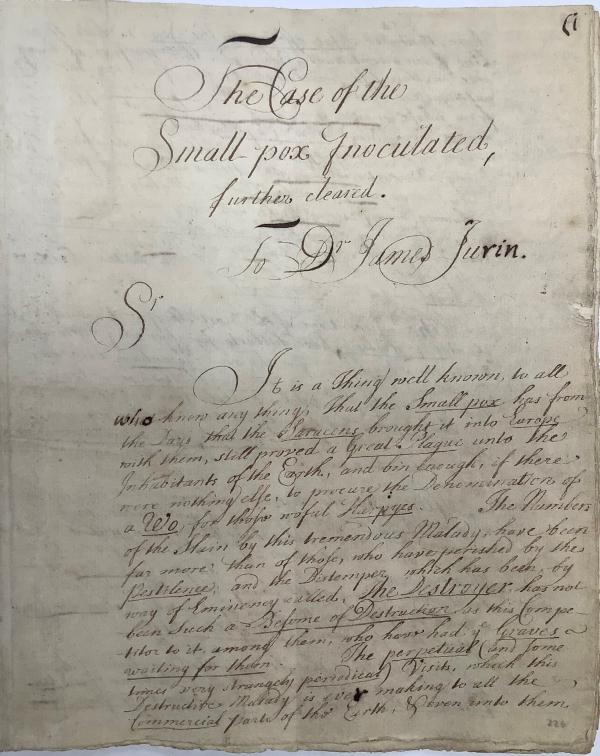
Image 1: Letter from Cotton Mather to James Jurin, 21 May 1723. Credits: The Royal Society
Deep Roots and Widespread Practice
Onesimus' story wasn't an anomaly. Across the African continent, variolation, intentional exposure to disease to build immunity, was a widespread, well-established practice.
Among the Yoruba people of Nigeria and Benin, smallpox was not just a disease but a deity - Sopona. Only specially trained priests were allowed to administer the inoculation, which was considered both a spiritual and medical practice.
In Ethiopia, particularly among the Tigre and Shoa people, variolation was routinely performed long before European contact.
Even economic systems reflected the value of this knowledge. Enslaved Africans from Guinea were often inoculated before being sold, increasing their market value in the eyes of European traders.
Healing Through Venom: The Snakebite Story
Let’s slow down and sit with one example that feels almost mythical: snakebite envenomation. In parts of Burkina Faso, Uganda, and Benin, traditional healers practised a form of what we'd now call venom immunotherapy.
In Uganda, for instance, healers took parts of snakes - puff adders, cobras, and more, and ground them with herbs like Steganotaenia araliaceae and Crinum macowanii. This mixture was then introduced into the skin through small incisions. The aim was not to cure a bite, but to prevent it from being fatal in the first place.
In Burkina Faso, a practice called \"Mphini\" involved rubbing dried snake parts and roots into fresh cuts, along with used engine oil. Yes, engine oil. It sounds unorthodox, but modern studies have shown that some of the plants used can inhibit venom enzymes, and repeated exposure does lead to antibody production.
These weren’t wild experiments. They were grounded in observation, ritual, and intergenerational wisdom. In a world without antivenom, these methods meant survival.
Plant Medicine: Immune Knowledge in Leaves and Roots
African communities also developed intricate systems of plant-based prophylaxis. Across Southern Africa, over 187 plants have been used to treat bacterial infections. Scientific research has confirmed that nearly 95% of them have antibacterial properties.
Neem (Azadirachta indica), garlic (Allium sativum), and ginger (Zingiber officinale) weren’t just spices; they were immune boosters. Fermented foods, rich in lactic acid bacteria, were seen not only as food but as medicine, bolstering gut health and immunity.
In communities around Lake Albert in Uganda, illnesses weren’t lumped into catch-all terms like \"fever.\" They were categorised based on water sources, environmental triggers, and spiritual causes. Treatments were tailored with precision.
The Maasai of East Africa drink fresh cow's blood mixed with milk as medicine. It’s a powerful tonic given to new mothers, warriors after circumcision, and the sick. And yes - they draw the blood with a nicked arrow and keep the cow alive to give again.
Medicine, Spirit, and Balance
African medicine was never just about the body. It was and still is about harmony. Illness wasn’t always physical. It could be a symptom of social discord, ancestral disapproval, or moral imbalance.
Traditional healers operated in dual realms: the physical and the metaphysical. They treated diabetes and ulcers with herbs, yes. But they also read smoke, cast bones, and interpreted dreams to diagnose what we might now call trauma, stress, or social isolation.
In many communities, healers were spiritual guides, therapists, and physicians. Their pharmacopoeia included not just plants but prayers, not just roots but rituals.
Cosmologies varied, but many were grounded in a worldview where the body mirrored the universe. Health was a state of alignment with nature, with spirit, with community.
In Yoruba healing traditions, illness isn’t just physical — it’s spiritual. When someone gets sick, it might mean their “Ase” (life-force) is blocked or an ancestor is displeased. Remedies include herbal treatments and rituals to restore harmony between the person and their spiritual world.
Completing the Story
Back to Jenner. His 1796 experiment with cowpox offered a safer method than variolation, true. But his breakthrough didn’t come from a vacuum. He built on generations of empirical knowledge from Africa, Asia, and the Ottoman Empire.
It’s not about diminishing his contribution; it’s about giving Onesimus and the African systems he represented their rightful place in the global medical narrative.
A Legacy We Still Live In
We stand today on the shoulders of many unnamed African scientists, herbalists, and spiritual leaders. Their work saved lives long before microscopes confirmed what they already knew.
The next time someone says vaccination started with Jenner, remind them: Africa was already doing it.
And they were doing much more.
If you found this enlightening, share it. Retelling history accurately isn't just an act of justice, it’s an act of healing.
Join the Lughayangu Community!